
Yang Jisheng
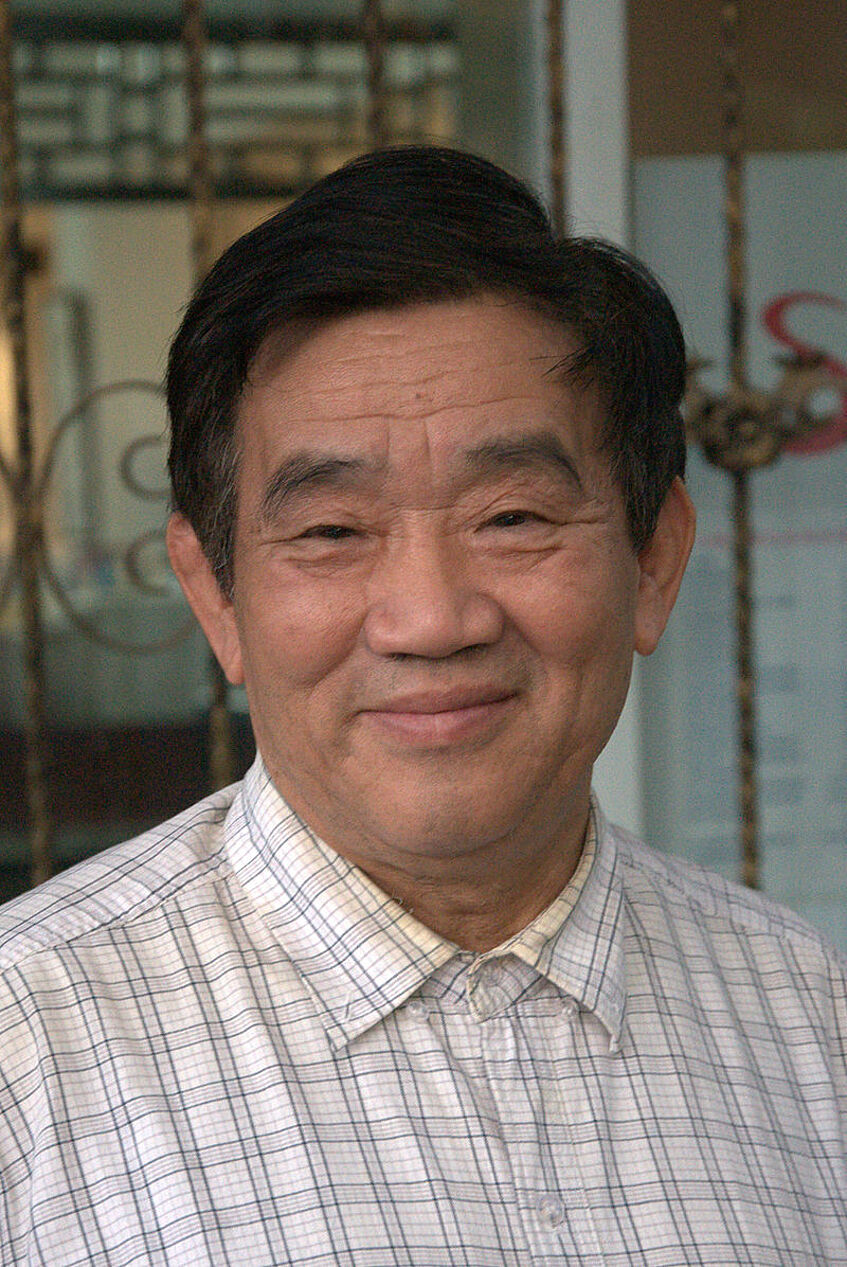
Yang Jisheng
Yang Jisheng
... was born in 1940 in Hubei Province. From 1960 he studies tractor mechanics at the prestigeous Qinghua University, in 1964 he was admitted to the Communist Party. When he graduated in 1966, the start of the Cultural Revolution changed his professional career, in 1968 he became an editor of the Tianjin branch office of the New China News Agency, where he wrote numerous commentaries on the political and social life. He was also responsible for a number of economic publications of the agency.
Already in 1998 Yang Jishen had published the book "The Era of Deng Xiaoping: 20 Years of Reform and Opening" where he also mentions the Democracy Movement of the late 1970s and the critical dazibao at the Xidan "Democracy Wall", but he has to change and shorten parts of his text by order of the censorship authorities.
In 2003 Yang Jisheng becomes a deputy editor-in-chief of the reform-orientated monthly "Yanhuang Chunqiu" (Spring and Autumn Annals). In 2004 he publishes in Hong Kong the book "Political Struggles During the Chinese Reform Era" revealing details on the Chinese leadership's behavior during the period between Mao's death and the Tiananmen Events in 1989. He also publishes three interviews he had made with die former government and Party leader Zhao Ziyang who had been deposed in 1989. In 2008 Yang became internationally known with his book "Tombstone - The Untold Story of Mao's Great Famine 1958 - 1962"
In early 2015 retired from the liberal "Yanhuang Chunqiu" magazine after growing political pressure by the authorities. In two open letters shortly after he exposes the censorship methods and reveals the fact that 20 to 80 percent of the planned articles for each issue (mostly on contemporary Chinese history and aspects of the reform politics) had not been not allowed publication.
Interview with Yang Jisheng (on October 28, 2013 in the "Yanhuang Chunqiu" office in Beijing)
Here you find the Chinese text of the interview.
Interviewer (Helmut Opletal): When you look back at the political reform debates of the late 1970s and early 1980s, how do you see them from today's perspective? And what impact did they have on the overall political reforms in China?
Yang Jisheng: In my book, “Political Struggles during China's Reform Era,” I discussed how, after the smashing of the Gang of Four and the subsequent purge, four political forces were vying for power in China.
The first adhered to Mao Zedong's theory of continuing revolution under the rule of the proletariat; this was one group. The second force distanced itself from Mao’s political thought of his later days, returning to the more relaxed politics of the 1950s. The third force rejected even the 1950s, aiming to create a new model, primarily in the economic sphere. The first force, though the Gang of Four was crushed, still retained some remnants of Mao's ideology, insisting on continuing the revolution. This force was very small.
The second force, representing the 1950s and embodied by Chen Yun, advocated for a planned economy system under the dictatorship of the proletariat. While the notion of a “dictatorship of the proletariat” was something everyone hoped for, the planned economy was maintained because the so-called Great Leap Forward in 1958 had failed. The planned economy should be maintained, but be slightly more relaxed, with the planned economy as the mainstay, regulated and supplemented by market forces.
The third force, represented by Deng Xiaoping, politically upheld the “dictatorship of the proletariat” but abandoned the planned economy. Of course, he didn't say it openly at that time, but in reality, the planned economy didn’t work, so he gradually moved towards a commodity and market economy. There was also a fourth force that wanted to get rid of of the “dictatorship of the proletariat” and the planned economy – this was the idea of democratization.
A result of the four theoretical concepts was that those who vehemently adhered to Chairman Mao's theory of continuing the revolution under the dictatorship of the proletariat gradually disappeared. Therefore there were only two main forces later. In the 80s and 90s, we see a struggle between two ideologies, one adhering to a planned economy and the other to a market economy.
This was manifested in the struggle between Deng Xiaoping and Chen Yun. Politically, they were united in upholding the leadership of the Communist Party, the “dictatorship of the proletariat”, and Mao Zedong Thought; their differences lay only in their economic management methods.
The fourth force was the one that politically abandoned the dictatorship of the proletariat and in economy believed in the market. This force was small at the time, but it has gradually grown stronger. The second and third forces have merged, both pursuing a market economy under the leadership of the Communist Party, that was the path of building “Socialism with Chinese Characteristics,” under the leadership of the Communist Party, with a market economy and public ownership.
Chen Yun's forces abandoned what they had originally insisted on, and they effectively lost importance. Socialism with Chinese Characteristics primarily meant leadership of the Communist Party and public ownership, simultaneously developing a market economy. The fourth force, which I just mentioned, the idea of democratization, gradually developed over the years, focusing on reforms of the political system and demands for modern democracy; they also agreed with the introduction of more market economy.
As mentioned earlier, after Chen Yun and Deng Xiaoping, there was the path of Socialism with Chinese Characteristics, under the leadership of the Communist Party, with public ownership as the mainstay, but a market economy. This market economy could not be perfect; rather, it was a distorted one, making its development difficult. There came the fourth political force that advocated political reform, democratization, and a modern democracy; and a market reform in economy, which should later be perfected.
Of the two out of these four forces, one followed the path of Socialism with Chinese Characteristics, the other wanted to pursue a perfected market economy based on constitutional democracy. The two were different. Those adhering to the path of Socialism with Chinese Characteristics were dominant, holding political power and controlling resources. In theory, it was persuasive, but it was gradually losing its effectiveness.
The fourth force, which aimed for constitutional democracy in politics and a change to market economy, has gradually developed their theory, with more and more people acknowledging its findings. However, it did not hold political power and was therefore suppressed. I think it will continue to develop in the future, and both these forces will continue to vie for dominance, potentially leading to fierce struggles. This is the situation in China.
As for the ideas of the early 80s and late 70s, they were quite radical, criticizing Mao and his Cultural Revolution. A minority raised the issue of fundamental democratization, but the majority didn't. And they all criticized the planned economy.
The most extreme view at that time was Wei Jingsheng's idea of a Fifth Modernization [including democracy beside the economic modernizations.] For this he was later arrested and imprisoned. Wei Jingsheng is gone, but his idea still exists for many people in China.
So I have given you the a general outline. As for the details, I could tell some, but not all because I've always covered economics as a journalist, I know more about economics than cultural matters.
Interviewer: Deng Xiaoping initially supported the idea of democracy and the Democracy Wall; he made some positive remarks about it. Later, he abandoned the idea, and instead spoke of the Four Cardinal Principles. Why do you think he changed his mind? Was he was genuinely supporting the idea of democracy in the beginning?
Yang: Deng Xiaoping initially supported the Xidan Democracy Wall, hoping to use grassroots power to break through the constraints imposed by Mao’s policies in his later years and the so-called "Two Whatever" approach. [An editorial of the Party newspapers on February 7, 1977, had demanded "Whatever decisions Chairman Mao made, we will resolutely uphold; whatever instructions Chairman Mao gave, we will always follow." Conservative Maoists insisted on this principle.]
However, after the Democracy Wall Movement in 1979, this wave of democratization threatened the leadership of the Communist Party that had already been under attack before, so any threat to the leadership of the Communist Party, regardless of who was in power, was met with great vigilance and immediately suppressed.
The Four Cardinal Principles were put forward, and the Democracy Wall was banned. In the late 70s and early 80s, the communist leadership had already been threatened. The ideas of democratization were already there. But Deng Xiaoping was not a democrat; ideologically, he still adhered to the Marxist and Mao Zedong Thought system. Deng Xiaoping’s theory mainly concerned economy, that a market economy could also exist under socialism, but he insisted on socialism.
However, he could not clearly define what socialism should be; it needed more exploration. We also can't clearly define what socialism is; we also need to question this more deeply. But the idea that socialism can function with a market economy, that was his invention. He abandoned democratization because the Democracy Wall threatened the leadership of the Communist Party. That eventually changed his mind.
Interviewer: Some people say he was afraid the violence of the Cultural Revolution would return, so he was frightened that students publicly question him, and there would be debates and struggles. Was he scared of that?
Yang: Oh, afraid that the Cultural Revolution would come back? It had just ended, so it was impossible for it to return. He was rather afraid that the Democracy Movement would endanger the leadership of the Communist Party, that's probably more accurate. He was afraid the Party's leadership would be overthrown by so-called counter-revolutionaries. The Cultural Revolution hadn’t negated the leadership by the Communist Party, rather strengthened it. Those who opposed the Party were imprisoned or executed. So he wasn't afraid the Cultural Revolution could return, but rather that it would affect the Communist Party's leadership.
Interviewer: When some within the Communist Party at that time wanted to ban the Democracy Wall and the unofficial publications, it is said that Hu Yaobang rather supported them. What is your perception of this?
Yang: There have always been big-character posters coming from within the Party. The "Great Leap Forward," the "Hundred Flowers Campaign," these were all put forward by Mao Zedong in 1957 and 1956, like the "Let a hundred flowers bloom, let a hundred schools of thought contend" campaign. But the big-character posters during the Fourth National Congress of the Party, the "Great Democracy Campaign" proposed in 1956, became for a while associated with rightists before they disappeared.
During the Cultural Revolution, he brought dazibao up again, using this form to attack “evil” developments, and allow the masses to express their opinions. Later, during the Xidan Democracy Wall, we saw a variety of opinions, sometimes within a minority only. Later, a smaller Democracy Wall was opened in Yuetan Park, a bit like the [Hyde] park in London, where different opinions could be expressed.
But after the Xidan Wall had been transferred to Yuetan Park, very few people actually went there; it was under strict control, and conditions were awful. There was hope to maintain a space for different opinions at Yuetan Park, a place to voice views outside the mainstream, but under pressure from the leaders in power, Yuetan Park also soon disappeared.
Interviewer: Was there a lot of democratic thought within the party back then?
Yang: The democratic faction within the Party was a minority. It started as a minority, gradually increasing in number, but it still remained a minority. Intra-party democracy is also very difficult. I do speak about intra-party democracy, but it's difficult to establish because the Communist Party fears it.
Hu Yaobang tried to implement intra-party democracy, but he was ousted. So, intra-party democracy means that different opinions within the Party can be publicly expressed, even elections can be held, allowing for differing opinions, but to implement it effectively remains difficult. It exists because of the democratic faction. It is actually a way of implementing democracy within the Party and then promoting it in society.
The democratic faction in the Party refers to those who advocate a transition of the Communist Party's towards democratization. That's one group, but there are two different concepts, the democratic faction in the Party, and democracy inside the Party. But there is one democratic faction within the Party that hopes to transform the Communist Party into a modern political organization, one that participates in democratic competition and elections. It certainly exists, but their numbers are very small.
Interviewer: You mean it existed back then?
Yang: Yes, but there were very few back then. There are more nowadays, but they are still a minority.
Interviewer: After that, for example, in the late 1980s, there were basically no democracy activities or expressions outside the Party. Activists were arrested, some went abroad, and some just stopped participating in any activities. I remember, earlier there had still been debates within the Party, especially around Hu Yaobang and Zhao Ziyang.
Yang: It mainly involved literary and artistic circles, also political thinkers, but they didn’t question the Four Cardinal Principles; breaking them would have made public statements impossible and very dangerous.
The literary and artistic circles had different forms of expression, such as Bai Hua's “The Sun and Man,” which was later criticized. [In 1979, the literary monthly “October” published a film script, “Bitter Love,” written by Bai Hua and Peng Ning. In 1980, Peng Ning made it into a film, renamed “The Sun and Man”.] Writers and artists also dared to come out expressing democratic and humanistic visions, and ideas of human rights.
Such novels and films, once published, were immediately suppressed. Bai Hua's “The Sun and Man” caused controversy. Many unofficial publications appeared in the late 70s and early 80s. I also wrote about them in my book. They were quickly suppressed and disappeared. Those unofficial publications and journals that came out around the same time as the Xidan Wall, existed only for a very short time and quickly disappeared.
Interviewer: So, they didn’t have a big impact on debates within the Party. But were there any open connections between those inside the Party and those outside?
Yang: “What path should China take,” this has always been a subject of debate. I wrote an article in the Financial Times titled "How Far Can the Chinese Path Go?" You can find it online.
Interviewer: Up to now, how many people are doing research on those developments from the 1970s?
Yang: There are quite a few. For example, Xiao Donglian studied the transition from the Mao Zedong era to the reform and opening up. He was a professor at the National Defense University. There was also Xu Xiao. And there were many poems, dramas, and novels dealing with it, but I'm not very familiar with literature and art.
Interviewer: You worked at Xinhua News Agency in the late 1970s?
Yang: I started at Xinhua in 1967, right after the Cultural Revolution, and continued until my retirement in 2001. Before the reforms, I was a reporter at the Tianjin branch station. Later, in the 1980s, I went to the head office to work on economics. I've always been dealing with economics.
Interviewer: How did people talk about democracy back then in the papers, in the Xinhua News Agency, and other media outlets?
Yang: The main focus was on promoting a market economy. I wasn't involved in education or culture, nor in politics. We had specialized political and cultural journalists, and others dealing with education. I was an economic journalist, doing reporting and editing. I covered reforms, reporting and researching economic reforms. The history of reforms during Deng Xiaoping's era can be found in my book “Deng Xiaoping and the Transformation of China,” published in 1998. I'm not very familiar with the specifics of the cultural aspects, so I can only give a general overview.
Interviewer: So, seen as a whole, was this era a success or a failure in your opinion?
Yang: China has achieved great success in its economic reforms. Over the past thirty years, GDP has grown at an average rate of over 9%, making China the world's second-largest economy, significantly changing also our social landscape. Although political reforms haven't been implemented, the political environment has become much more relaxed. Without this relaxation, I wouldn't be able to talk to foreign journalists for example.
The economic situation has improved, but reforms of the political system have been delayed and significantly slower. Power doesn't belong to the majority of people. A significant disparity has emerged between those with and without power, creating unfairness. Through thirty years of reform, the economic pie has become very large, but its distribution is highly unequal.
Those with power have received a larger and better portion, while those without a very small one. This system, formed over more than thirty years of reform and opening up, could be called a “power-related market economy system.” Although it's a market economy, it's controlled by those in power. Power manipulates the market economy. Under the control of power, the market remains distorted and imperfect. Unfairness has become the most fundamental problem. Significant contradictions and disparities have appeared between those with and without power, and this has led to social disharmony, hence the current call for "building a harmonious society" and maintaining stability. It’s all stemming from social disharmony and unfairness.