
Sun Weibang
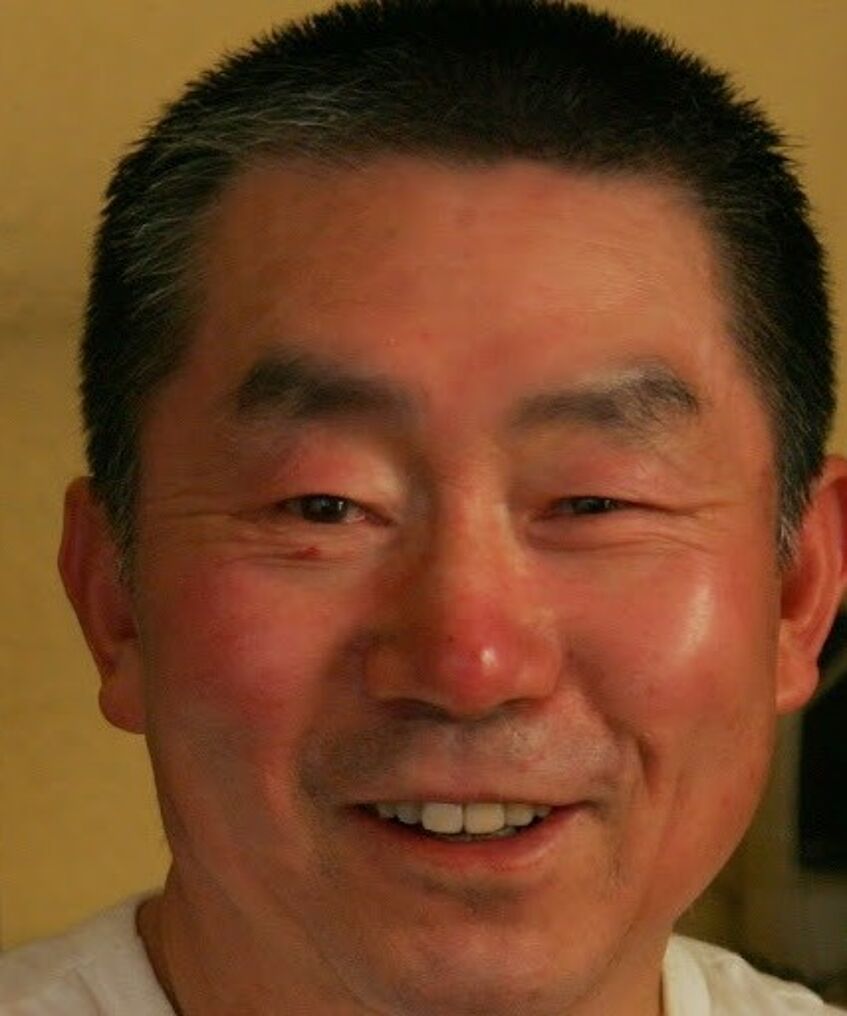
Sun Weibang
Sun Weibang
... was born in Qingdao (Shandong) in 1943. In 1979, under the influence of the Beijing Spring movement, he founded his own independent journal "Sea Spray" (Hailanghua) in Qingdao, where he used the pseudonym "Sun Feng". In 1980 he participated in a meeting organized by Xu Wenli and Wang Xizhe to debate the founding of a new political movement or party. In January 1981, Sun attended another similar conference, in April he was arrested, just like Xu Wenli and others, and he was sentenced to a one year prison term. In 1989 Sun joined the Tian'anmen students' movement. Accused of "counter-revolutionary agitation" , he was handed down a 12 year prison sentence. In 1999 he managed to use a temporary parole to flee the country. After having reached the French embassy in Vietnam, he was allowed to travel to France. Sun Weibang now lives with his family in Paris.
Interview with Sun Weibang (on April 28, 2014 in Marie Holzman's apartment in Paris)
Interview with Sun Weibang (on April 28, 2014 in Marie Holzman's apartment in Paris)
Here you find the Chinese text of the interview.
Interviewer/Helmut Opletal: Please tell me how did you experience that period of the Democracy Wall Movement?
Sun Weibang: I read the newspapers and listened to the radio every day when there were regularly groups of students or intellectuals putting up big-character posters and giving speeches. I could hear it every day from the official communist radio station in Qingdao, and I felt quite inspired.
I asked myself, should I also participate? I even talked to my family about it. They said, "Why would you do that? Don't go looking for trouble." But I had a wish to take part. For me that period was the best in China's history. The People's Daily at that time wrote that China might no longer have counter-revolutionaries, and some articles said that we could catch up with the United States and Britain, and that we would no longer be considered counter-revolutionaries orselves. I discussed this with a very good neighbor at the time, and he said, yes, there was really big progress. So I thought about it, but never got to act.
During the Spring Festival of 1979, Zhao Zhongxiang, a broadcaster from CCTV, led a group to Tianjin. They interviewed a man named Su Amao who had been a spy for 17 years without any apparent reason. He was also a poet, but I don't remember which country he had published so many poems in. He was always holding a little girl from next door. Later, this little girl regularly visited him in prison until the day of his release, and then she married him. Zhao Zhongxiang officiated at his wedding. I was deeply moved, tears streaming down my face.
Two or three days later, I took a brush and started writing a big-character poster. I don't know how many I wrote, maybe thousands, without any drafts. My family was worried because I had previously been labeled a counter-revolutionary during three or four years. They weren’t happy, and told me not to participate, but I wouldn’t listen to them and insisted on going. Finally, I told my mother that if I saw my writings were received well, I would publish them. If people didn't like them, I would just come back and forget about it.
On March 12th I went [to Beijing.] That day, I looked at all the places where dazibaos had been posted. They were selling the "Exploration" magazine there, and I thought that must be Old Wei Jingsheng’s. But what could I do as only one individual? I found a small bucket, bought some flour, poured boiling water on it, and then pasted my posters on the wall.
At first, I posted them all by myself, hoping someone would come and help me because I was quite busy with other things. Eventually some came; it was Li Jiahua from Guiyang, from the Enlightenment Society. He was also in Beijing at that time. I had already read the posters by Wei Jingsheng, Ren Wanding, Li Jiahua, and Huang Xiang before I started posting myself. By the time I finished, it was already 5pm. But I couldn't leave because so many people were reading them, and it was difficult to get out.
They all surrounded me, and I told them that I had to leave. I went to stay at my uncle's home, and when he saw me, he said, "So you're also participating?" I said no. He already knew what I was doing, but didn't say anything. I stayed overnight, and the next day I returned to Qingdao.
But first I went to the Democracy Wall. There I saw many people taking pictures and filming. Some were standing on ladders. I don’t know what cameras they used. Some also had tape recorders, they just recorded randomly without any script, and they were doing it themselves.
I met Meng Liang, who worked for the State Council, and Wang Chong whose families were assistants to Xue Muqiao [an economic reformer and politician.] At that time, Meng Liang was already an official, but Wang Chong wasn't. There was also someone from the People's Daily recording there. When he said, "That's him," I thought I would be arrested, so my friends pulled me away to eat. But I said no because my train left at 2 o'clock. So they kept me eating until 2 o'clock. Then I returned to Qingdao. At that time, I only wanted to put up big-character posters, and had no other plans.
But after returning to Qingdao, I was exhausted and needed sleep. The next day, when I went to work, the mailroom staff exclaimed, "Wow, you have so many letters!" I saw they were all from Beijing, and I knew I couldn't back down any more; I had to keep going.
The first letter I read was from Xu Wenli. His handwriting was very distinctive, flowing and elegant. There was another person with exceptionally beautiful handwriting, the editor-in-chief of the “Theater Journal”, named Yu Jianchang, whose writing was both clumsy and graceful. Then there was Wang Juntao's.
I continued receiving many letters every day. I felt being trapped, unable to escape. I also received independent magazines from all over the country, even from Guangdong and some from Beijing as well. I also heard that my big-character posters had been broadcast by various [international] radio stations, particularly the Central News in Taiwan. I was somewhat encouraged, realizing that I couldn't turn back now. I had to continue my activities, as my interactions with others became more frequent.
I hadn't planned to start a publication yet, so I wrote some articles and sent them to Xu Wenli in Beijing, asking him to publish them. Others were also willing to post them for me, so I sent them to them as well, and they continued to publish them. In May, a girl came to my home. My sister said someone had come looking for me, and when I looked, she was sleeping in my sister's bed. When she woke up, she took photos some of my big-character posters to bring them to Beijing so that they could also read about the situation in Qingdao.
Interviewer: Who was she?
Sun Weibang: There were thirty or forty students of her in Qingdao. So it wasn't me who started it, but these students. They kept coming to my home to discuss and exchange views. Because they all had published contributions in official magazines and newspapers, while I had none, I held a high opinion of them at the time, thinking they were more capable than me. But they were willing to meet and discuss with me, talking endlessly. They were indeed knowledgeable.
I wasn’t familiar with other famous Europeans apart from some well-known literary figures, but they knew a lot about them. But they never managed to get a publication running. In the end, I started it all by myself, without waiting for them. The first issue was probably published in early July. When it was published and I went to see them, the leader admitted, "We were just talking without action; we've wasted your time."
I published the first issue of "Sea Spray" on July 30th. I wanted to continue, but didn't have enough energy. But I had to. I wrote everything myself and engraved it on the wax stencils. I was alone for the first few issues, which exhausted me. My family said, I was working too hard and not sleeping enough, “How can you handle it?" I said, "I have no choice. I've already bragged about it. How can I not continue?" So I did four issues just by myself.
One evening, someone called my name. He didn't know my real name was Sun Weibang; he thought it was Sun Feng [the pseudonym he used,] and he was calling from outside. I went downstairs and asked him to come upstairs. He was also from Qingdao, and lived very close to me. His name was Jiang Fuzhen.
Although we originally lived close by, he had traveled to Beijing to find me. There he had met Xu Wenli who told him that I was in Qingdao, so he came. He was the first person to really help me. However, he wasn’t able to write something. He seemed to have a decent education, but his handwriting was terrible and difficult to read. He was fifteen or sixteen years younger than me, and no matter how smart he was, he couldn't possibly write an article like an adult.
All his texts had to be revised by me. After he had helped me like this for a while, one day, while I was at work, someone came to see me. It was a certain Chen Zhongxiang who showed me the “Qingdao Daily” that was supposed to contain two of his articles. He called me "teacher" when he showed them to me.
I said, "Don't call me teacher; we should call each other just by our names." He proposed to work with me on the magazine “Hailanghua” (Sea Spray) I asked him who told him, and he said it was his sister's teacher, Mou Chuanheng [another civil freedoms activist in Qingdao.] Lao Xue, their common teacher, knew another teacher named Jiang Youxin, a very famous thinker and educator in Qingdao who should have become a the vice mayor of the city. But before the official announcement, he became subject of investigations by the Organization Department, and he quickly died. It was him who had sent Chen Zhongxiang to come to visit me in the first place. Chen has also deceased. After searching for me for a while, the now-famous Mou Chuanheng came to see me together with more than a dozen people.
That night, when someone knocked at the door around 1 o’clock, I knew it was Chen Zhongxiang who had brought Mou Chuanheng. I talked with Mou until almost dawn before he left. After that, they frequently came to see me together with the others. I had not been in contact with them myself because I was already 36, while the oldest of the group was only 22 or 23, and the youngest was only 16 or 17. I didn't think much of their writings either; it was too childish and lacked substance.
Also I was not sure how much I could rely on them. So I didn't want more contact with them. They were also frustrated with me. Of course, I have my personal shortcomings; I'm decisive and always like to get things done quickly, and I can't stand not finishing them. They also talked a lot and didn’t do much; this was also difficult for me. I intentionally expressed my dissatisfaction, hoping to get them to leave. But they didn't do that, and we just maintained a strained relationship.
During this period, a man from Beijing named Lü Pu also came to see me. He was from a cadre family, so he knew many things that he shared with me. After meeting twice, we went to Jiangqiao [in Shanghai?] to spend a night. After Lü Pu had left, other people came to see me.
At that time, my younger brother was also staying with me. He was regularly going to Yinying [?], he had just graduated and finished his university entrance exams. I said, "You just finished your exams, why don’t you wait for your results at home?" He said he knew for sure. I said, "What are you sure about? If you're too sure, you'll have failed the exam." He stayed with me, but sometimes I couldn't find him. He also liked to sleep.
One day, a girl who looked about fifteen or sixteen came. I thought she was a classmate visiting my brother, but she was actually looking for me. During our conversation, I realized she couldn’t just be only fifteen or sixteen, but she still looked very young, not like an adult. Her clothes didn't look like those of an average family. To this day, I still don't know her name.
This girl would come to see me every day, and she knew that after work, I was happy to talk to her. She was very pretty. My whole family would ask, "Why is such a young girl coming to see you?" I responded that she wasn't that young anymore, and she had told me she was 26. It seemed everyone of my family liked her, adored her, saying she looked so young.
She wouldn't tell me her name. During her time in Qingdao, she only talked to me, and later gave me various publications. Perhaps her father's name was on some of them, so she used a small knife to cut it off. She gave me lots of publications. Some of these magazines were published twice a day. Many of my later articles used their topics. Later, the Public Security Bureau confiscated all of them. One day at work, a colleague I was close to told me that the Shandong Provincial Party Committee wanted to talk to me. I asked what they wanted to talk about, and it turned out they wanted to find out what I was doing.
Interviewer: What kind of things did these publications communications she gave to you talk about?
Sun: They were Communist Party internal publications, full of negative events, about oppressing people, people writing letters to the authorities, and items concerning the Soviet Union. When the colleague told me that some people had come to my workplace talking about me, I told him that this scared me a bit, and I feared that they were coming to arrest me.
My colleague mentioned that he shouldn't talk about it; they had already questioned him for several days, but he could only tell them what he knew. He said they didn't seem like they were coming to arrest me. He had only told them about my good points and wanted them to accept me in a positive way. I was a little confused, so I went to see these people myself, but couldn't find them. I looked for Wang Yao, the party secretary of my work unit, and asked him who searched for me. But he said he didn't know.
As soon as I got home, that girl would come to visit me, leaving every day around 11 or 12 o'clock. One day, she suddenly brought up the investigation. I told her, "I think I know who you are. You're not from Beijing, but from the Shandong Provincial Party Committee, right?" She denied it. Although she knew about this entire investigation, she wasn't from Shandong.
Then she was about to leave. After those ten-odd days, I had realized I really liked her. She was very articulate and could play the piano; I was really attracted to her at the time. The apartment where I lived had just been renovated; it wasn't the best, but it wasn't bad either. She said she'd like to live there someday, and I was overjoyed. When she said she was leaving, my whole family thought she was gone, but that night she came back again, saying she didn't want to leave. But I knew she was living with a certain Mao Xianyu in the Badaguan area.
During this time, I encountered [?] other things. After my big-character posters had been put up, someone wrote a letter saying he was coming to see me. He showed me some texts he had written, including one addressed to Xue Muqiao. I put those letters aside after reading them.
Then, not long after the girl had left, this person suddenly appeared again. I asked him what happened, and he showed me a note. It turned out to be from the person I had been corresponding with. He was planning to kidnap me, and I should leave with him. I didn't know how to handle this situation and was a little scared. Then he said he was going to instigate an uprising to eradicate the Communist Party. When he wanted me to go with him, I felt terrified. So I went to Chen Zhongxiang to deal with the matter. Actually, Chen was also very impulsive and didn't know how to handle such situation either.
One evening, Chen Zhongxiang, me, and a certain Cui Yuying, who was about my age, discussed it all night, but we still had no idea how to deal with this person. Actually, all his activities were being monitored by the Public Security Bureau, but we didn't know. I got scared and told it the person who was investigating me through my work unit. That person was very experienced and skilled. He came with me in a hurry and shouted a few times, scaring the man away. He proposed to give him ten yuan to leave. He also handed him ten baozi [steamed buns] that eventually made him go away. I felt relieved, because I had been really terrified.
I asked Chen Zhongxiang to tell Xu Wenli about this incident. I had always sent out my printed copies of the “Sea Spray” journal on time. The only person I could get along with at the time was Xu Wenli; I didn't seem to cooperate very well with other friends. Wanting to eliminate the Communist Party right away was certainly not the way I thought at that time. I didn’t know whose fault it was. I said we'd rather interrupt the publication of the journal than be arrested. I told and wrote this to friends as well. But no one listened to me.
That was the time when Xu Wenli asked me to come to Beijing, saying he wanted to bring Wang Xizhe also to discuss some things. I stayed in a small hotel in Ganjiakou [in the Beijing suburbs.] When the meeting officially started, twenty or thirty persons had come, many from Beijing. They didn't know that there was a meeting planned, they just came to see me, which made me very nervous. I was new there and didn't know much to say.
That day, the three of us met. Originally, we were supposed to talk personal matters, but Wang Xizhe took up all the time and I didn't get to say a word. That later somehow worked in my favor. When the communists sentenced participants of the meeting, they thought I wasn't all that important and just released me.
When the others had left, Xu Wenli was unaware of the situation. I got detained at the hotel. Several women came and asked me where I was from. I answered according to what Xu Wenli had instructed me, but they said, "You speak Shandong dialect, how come you're from Shunyi [a rural county in Beijing?"] I didn’t know what to say.
They wouldn't stop questioning me. It was hot that day, and I was sweating profusely. These were disguised police officers and hotel staff who had me there, and I was helpless. Later, a young woman surnamed Lu came up to me. Maybe they felt embarrassed to do anything to me in front of her, so they left. Xu Wenli only found out about this incident when I met him much later. Until then I had never told him.
He also didn’t know about the day when the police detained me. After the meeting, I returned to Qingdao, and no one cared about the matter anymore, so I forgot about it. It wasn't until two years ago, when Xu Wenli came [to the US,] that I brought it up.
In Beijing, Xu Wenli had taken me to places, and I also wandered around aimlessly by myself. This all contributed to my arrest and trial. At my arrested, they asked me what I was doing in Beijing, and I said I was going to search for that girl because I missed her. They knew who she was and said, "Do you think she'd even be interested in you? Such a high-class person, do you know yourself who you are?"
But they thought I was really looking for that girl. At least that was the conclusion in the case report. Another reason for my lighter sentence was that Wang Xizhe had taken up all the speaking time in our meeting, and I wasn't mentioned in the records at all, as I didn't say a word. But I didn't know this at the time; I only found out after I was released. Although Beijing and Guangzhou included me in their cases, Qingdao didn't, treating my case as a separate one.
I anticipated that arrests would occur during that period, so I made preparations. I wrote letters to Fu Shenqi and Wang Xizhe advising them to adhere to Deng Xiaoping’s principles and not to oppose the Communist Party. Although my articles didn't convey this message, my letters did. Some people wondered how I could have become a communist, and they even strongly criticized me in their letters. But I thought, let them criticize me. I was only doing this to save myself; I was aware of what could happen, and had written these letters so that in case I was arrested, they might have some positive effect for me. And indeed, they did.
When I regularly visited Shanghai in 1982 and 1983, Fu Shenqi [a local leader of the Democracy Movement] asked me, "When the Qingdao police investigated you, weren’t they somehow strange? One of them, a short guy, spoke really well of you." I asked, "What did he say?" Fu responded, "They specifically wanted us to say favorable things about you, and they didn't want to hear anything negative."
Later, the prosecutor quoted my advice to my friends in the indictment against me. He told the court, "We noticed that Sun Weibang was part of a criminal organization, but we've already accepted your case because of the letters to his associates and the advice they contained."
But there was also a problem for me. On the twelfth day after my arrest, I had agreed to a sort of compromise. I was the one who received the lightest sentence in Qingdao, but arrests had been an extraordinary large-scale operation. Just for me alone, a big number of cars were deployed, and two roads were illuminated with searchlights. Armed police cordoned off those roads. My father was already completely paralyzed then and couldn't get up from his bed any more. So I just went straight over to the officers and said, "Just go ahead and do what you want to do." The police laughed and arrested me. They were still laughing about this when I arrived in prison.
There were many people interrogating me. The chamber where it took place was about the size of four or five rooms, an impressive place in Qingdao. The interrogators looked familiar to me, but I couldn't place them.
A few days later, I remembered. Shortly before my arrest, a man came one evening after dinner, riding a bicycle. He said he was the principal of No. 12 Middle School and asked if I was Sun Weibang. He said he was sent by the municipal party secretary, and I should attend a meeting of party cadres the next afternoon.
I answered that I was just an ordinary citizen, not an affiliated cadre, but he insisted saying it would benefit me. I knew they wanted to grab me, so I didn't go to that meeting that lasted all day next day. That evening he came again, saying that Secretary Li Zhiwen had complained that I hadn't come and didn't realize they were trying to save me. He hoped I would come the next day, fearing that after that it could be too late. This secretary at was a newly transferred former party secretary of Shenyang.
I didn't dare tell my mother all this. After three days they came to arrest me. The man who had claimed to be the principal of No. 12 Middle School was actually a policeman named Liu Wen, the head of the pre-trial section, and formerly the dean of studies at No. 12 Middle School.
On the twelfth day, I agreed to give in because I was very tired and couldn't sleep. They took me out and asked where I had put those documents. I was confused and said I had them with the principal, the one called Jiang Fuzhen. But actually there were two people with the surname Jiang; the other was the girl who often visited me, brought by Chen Zhongxiang. I had left important things with her, but not with Jiang Fuzhen. But because of this wrong information, they got Jiang Fuzhen, and I realized they had taken the wrong guy. I said it was a mistake, and they asked me who the other person with the surname Jiang was. I knew what happened, when I heard the sound of motorcycles and cars driving away.
My family consisted of my parents, two younger sisters, and me. They arrested me and my two sisters, leaving the two paralyzed parents at home. I didn't know at first, but then I received a phone call telling me that my sisters were also at a police station in the north of the city. I feared for the life my parents who would have no one now to take care of them. So the police told me to confess quickly. That's why I gave in and confessed everything.
After the initial interrogation, the Qingdao authorities insisted on sentencing Mou Chuanheng more severely than me. However, they received instructions from Beijing that I also must be sentenced, regardless of Mou's case. When Deng Xiaoping called for the arrests, I was still working in Qingdao, but I did everything secretly. Mou was openly holding meetings and distributing leaflets though, which I considered a mistake. I still feel quite upset about this. I was angry with him because I had tried to protect him. He was still very young, and I thought it didn’t matter if I went to jail with my 36 years, but he was just a kid then. So I distanced myself from him and his people, but the interrogators interpreted this as looking down on him.
Mou and his group were directly against the Communist Party. In their meetings they had called me a “counter-revolutionary within the revolutionary faction.” This caused the Qingdao politicians to sympathize with me. And because my parents were paralyzed and near death, the police also sympathized with me and wanted to release me. During the prosecution process, they had prepared twice my release, but it didn't happen. I only learned this later when I was free again.
My lawyer told me to be careful; Qingdao wanted to release me, but there was a central document that demanded that those arrested nationwide should be also sentenced. After this warning, Qingdao wanted to release me quickly, because if they waited until several others had been sentenced, they wouldn't be able to liberate me anymore.
It was a very hot day, but I was still wearing a warm coat when they called me. I heard someone shouting "Brother Sun." I turned around and saw a bearded man who had called my name several times, but I didn't recognize him. It was Mou Chuanheng. The prison guard told the two of them not to talk, only after we were at home again. I think that at that moment, Mou Chuanheng said something to me like "Brother Sun, I'm sorry, we are really not as good as you." That was the most sincere thing Mou has ever said to me in his life; they realized they were mediocre. Later, at the court, the verdict was read: I was sentenced to over a year in prison, and Mou Chuanheng was released, but had to stay two years under supervision.
When I got home after my release, I couldn't bear to see my father. My mother was already failing; if I had come back any later, they might both have died. The next morning at seven o'clock, I took my mother to the hospital. The doctor there, a graduate from Peking University named Xu, told me it was already too late for my mother and there was no need for surgery. I told him that Dr. Wu had said something different, and I would take the responsibility for my mother if they operated her. [… …] And she recovered quickly after the surgery. My mother passed away last year at the age of 99. It was truly fortunate that the communists had released me in time; otherwise, she would have died long ago.
Nowadays some online articles discuss the reason for my release, suggesting that this girl played a role. I don't think she had any influence. The reasons for my release were rather connected to my own behavior. I had surrendered myself and cooperated. Second, in thoughtful preparation I had written those letters that became evidence in my favor. Third, Mou Chuanheng was defiant towards the Communist Party, but I wasn't.
When I was arrested in the end, I had brought out two issues of “Sea Spray” per month, it had more issues and articles than other independent journals. I also published a second journal called “Ren” (Human), which ran for 12 issues. Altogether I wrote 88 articles. So Xu Wenli's advice to be softer and continue publishing for a longer period seemed correct.
Interviewer: Were there any other independent magazines in Qingdao?
Sun: Yes, they were run by Mou Chuanheng. One was called "The Banner of Theory" (Lilun Qi) and another one "Forum of Friends of Knowledge" (Zhiyou Luntan) [?] that published one or two issues. Mou was a very good person, a typical Shandong man, straightforward and uncompromising, but he was much younger than me.
Let me tell you more about that young woman I mentioned earlier, and why I truly liked her. She had lived in Zhongnanhai [the seat of the Party leaders in Beijing’s] and she has told me a few stories. She said she had once met a political commissar from the Chinese Volunteer Army in Korea. After the war, he had been assigned to be head of a tax bureau in Yunnan, but the locals snubbed him and drove him away. So he was unemployed and spent his time writing petitions to the authorities. The woman often handed him 50 Fen or one Yuan, along with some food coupons, and they became quite close.
Once during the big rehabilitation movement in 1978 and 1979, the ex-soldier knelt down in front of her, saying that he had already been rehabilitated, but he still demanded the return of his belongings. The girl told me many similar stories about political persecution [between the 50s and 70s] that she had read about in some publications. That's why also I think she was exceptionally kind. She called herself “Sun Haiyin,” but that wasn't her real name. I have never it found out.
They certainly started the investigation against me because of my big-character poster. They didn't contain any anti-communist remarks, but I think they were different from Wei Jingsheng’s. I read the report after my release. A person named Li Erran who was arrested at the same time as me, was kept in a police detention center for several months. The Public Security Bureau was very strict at first, but then they became more lenient. At night, when no one was around, he could rummage through the place and find some documents, some of which he copied for me.
I've forgotten now where this material is, but when I read it, I realized that my investigation was related to him. The head of the [Party] Organization Department at that time was Hu Yaobang. He had personally approved and issued a directive to the Shandong Party Committee regarding the investigation of Sun Weibang. I was to be severely reprimanded, but it said I shouldn’t be considered a counter-revolutionary. Still I was called a counter-revolutionary in the investigation conclusions.
[… …] When Wei Jingsheng was arrested, we all joined to appeal against his detention. I remember I copied many illustrations from the “Exploration” magazine to the “Sea Spray”.
Our magazine always had a satirical tone towards Deng Xiaoping. In the first issue, I published an article called "On the Party," discussing what a party is. In the number 2, I wrote an article "On Power." In the third issue, an article was called "On People," and it was talking about us. I was only relying on my life experience then, but I also enjoyed reading literary works. I owned and read almost every volume of European literature that had been published in China.
What it practically meant, is difficult for me to articulate, but I have a general understanding that all our activities were about being human, by exercising our free will. I can see that. What I cannot understand is if nature doesn’t bestow this human character on us, where should our freedom come from?
So I wondered, what exactly went wrong with the Communist Party? Marx has only discussed human free will, but what can we really do? Marx didn't think that our acting was determined by a god, but as human beings, we had a human nature that made us do certain things. So Marx didn't contradict this idea, but he contradicted nature. Without the nature giving us our character, we wouldn't be able to do anything.
Therefore, the Communist Party, and for example [the then current Party Chairman] Hu Jintao, often said that one's outlook on life and the world was fundamental and it determined everything. He has told this to provincial and ministerial-level cadres. He said two [?] should be like that, and even more so the Communist Party [?].
This shows that Hu Jintao understands why people live. Humans are born of parents, and no one can choose not to live, so people live out of necessity. They don't live for revolution, patriotism, or loyalty to the Party; they live to seek advantage and avoid harm, to yearn for happiness and avoid suffering. Therefore, people have no obligation to serve a party or a country, and this is where Marx went wrong. He only considered what we can do with our own strength and will, without considering what we can do if nature doesn't grant us that will. Marx profoundly contradicted human thought; he didn't study human thought itself like what is a human being? He only studied what humans wanted to do.
I've been reflecting on this issue in those few articles I've written. However, my thoughts weren't very thorough at the time, so I could only express them in simple terms. Therefore, some people mocked me, giving me nicknames like "folk theorist," which wasn't very flattering.
They said my articles didn't reach a professional level. I know they're right, because I haven't had much formal education, and books about “existence” were too difficult for me. I genuinely didn't understand. Back in Qingdao, I kept reading them, but still couldn't understand. I couldn't figure out what existence truly was. Later, during the June Fourth Incident [of 1989,] I was arrested again.
I hadn't participated in the June Fourth events; it was a complete mistake by justice that made me furious. But there was nothing I could do in prison. I had high blood pressure and a bad heart, so I didn't talk to the police or other inmates. I was all alone, just reading books, but I couldn't understand them. So I tore the books into four or five parts and copied them one by one. I copied for ten years, and then I finally understood.
Now I understand the difference between folk theories and real theories. Back then, it hadn’t worked. When they arrested my brother [?] they also arrested Fu Yuehua [an activist that supported petitioners in 1978.] Xu Wenli wanted me to write about this and send it to him. I felt obligated to do this, even though I didn't want to, but I did what Xu Wenli had asked me. That's why Xu Wenli’s text was what I had written in Qingdao.
Interviewer: I have barely asked you any questions; it’s only what you like to say yourself. But could you please tell me one more thing: how did you come to France?
Sun: It was after I was released in 1999. I returned to Qingdao, but I couldn't make a living because I had no money at all.
Interviewer: You were sentenced to twelve years the second time?
Sun: Yes. I didn't actually do anything. Because my wife had a child, I was afraid others would bully her, so I didn't participate in the June Forth events. I kept blaming myself, and I left Qingdao, running off to Henan Province to hide and avoid this movement.
Later I went back and argued with my wife, but then I left and went to watch the demonstrations. [Unclear] Twelve years. Later, the judge said, "I won't label you with a crime." The judges all thought I was wrongly detained, and those who had arrested me also knew I was innocent. But they still sentenced me to twelve years.
After my release in 1999, I tried to open a shop. But the police came as soon as I opened it, but no customers. The police came to my home every day; they wouldn't let me do anything and constantly talked to me. When I went to Jinan twice to see friends, they both times detained me and brought me back. They knew immediately where to find me. I went to Beijing, and within an hour of arriving at Xu Wenli's home, they detained me again. I had no choice; police was watching me too closely, they always followed me and my wife, so I decided to escape.
When I rum away, I was very ill. I often wasn’t able to move, like paralyzed. This happened more than thirty times, the longest lasting half an hour, the shortest only a minute or two. My sister said, "What are you going to do? Why don't you leave?"
There was a man named Jiang Jinshi, who wasn't one of us, and I didn't like him, but I was scared, so I decided to run away with him. He helped me when I had an attack on the way. We fled to Vietnam. There, around four in the morning, we ran to the street, found a taxi, and drew an American and a French flag which we showed to the driver.
He understood and took us to the French embassy. It was just dawn when we arrived; the embassy didn't open until 10, so we hid in a grove of trees, afraid of being chased by the Chinese and Vietnamese. At 10am, I ran inside. The Vietnamese police guards tried to stop me from entering. Then a woman came out of the embassy building, giving orders with a loud voice. The Vietnamese soldiers didn't dare do anything and handed us over to that woman. She was probably a deputy ambassador.
After taking us upstairs, we met the ambassador and a translator, but her Chinese wasn't very good. We talked for about an hour, and she promised that we were safe, solemnly telling me that China couldn't catch me and that she would protect me.
I stayed there for over two months. The French and Chinese leaders discussed my case many times, and the ambassador told me about each contact. Sometimes he invited me to dinner informing me what the Ministry of Foreign Affairs and [Party Chairman and State President] Jiang Zemin had said.
Once, the ambassador hosted a very grand reception with Vietnamese officials. The courtyard was full of people, including high-ranking Vietnamese, without specifying who it was. But then he said there had already been an agreement to put me on a plane and secretly send me to France. When the day approached, they said to our surprise that secrecy wasn't necessary anymore, as Jiang Zemin had agreed, and we could leave the next day. A secretary of the embassy took us both to France.
Interviewer: What has actually happened to that girl you knew?
Sun: I lost contact with her after this early encounter. She had stayed with me for about twenty days. Originally she wanted to marry me, but she wasn’t willing to accept my life, saying, "You're bound to be unlucky; the Communist Party will definitely arrest you."
The day I saw her off to board a ship, she told me that she was going to the Dalian garrison, apparently to handle some military business. Her ticket was for four or five in the afternoon. When I came back, I saw a group of people and some children. They were neighbors asking questions to the children. They also asked me if I knew Sun Weibang. I said, "He stands right in front of you."
They had come to see me, and it was after that that I started my publication. It was because of this group of people, about a dozen of them. There was also a certain Liu Xuxuan, secretary of the Film Bureau in the Ministry of Culture. He was a native of Qingdao, a former “rightist” who had no job and spent his days going to Beijing to make petitions. He was the first to bring my big-character poster back to Qingdao.